The AI video generation landscape is heating up with the exclusive release of Google Veo 3.1, a powerful new model that’s shaping up to be a major competitor to OpenAI’s Sora. Packed with a ton of new, director-focused features, Veo 3.1 isn’t just about creating videos from text; it’s about giving creators unprecedented control over the final product. But does it have what it takes to dethrone the current hype king? Let’s dive in and see what Google’s latest powerhouse can do.
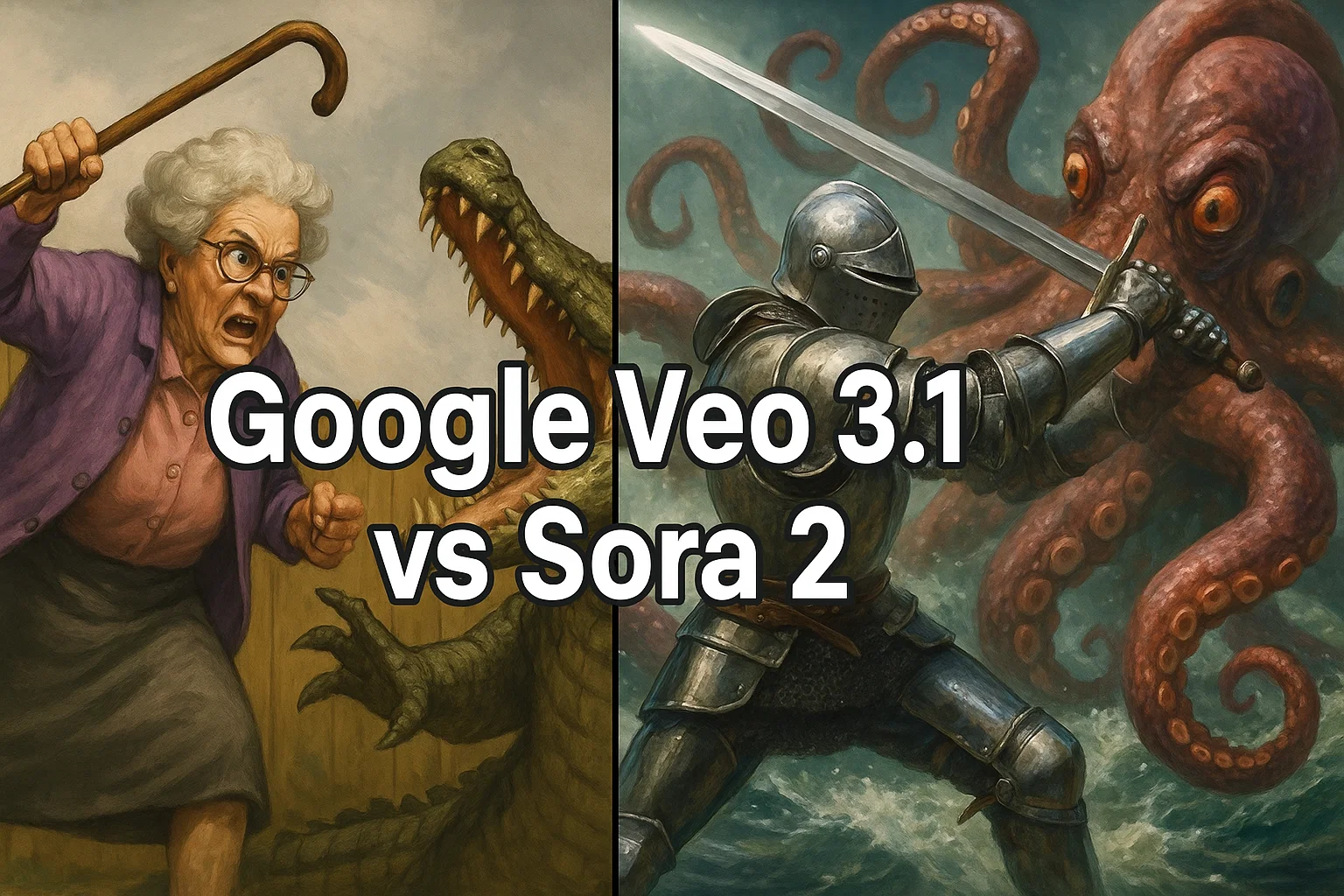
Don’t mess with grandma! One of the impressive first clips from Veo 3.1.
First Look: Google Veo 3.1’s Jaw-Dropping Video Generations
To get a feel for its raw power, let’s look at some initial text-to-video generations. The prompts are imaginative, and the results are often hilarious and surprisingly coherent.
Grandma vs. Alligator
A simple prompt, “grandma using her cane to scare an alligator off her porch,” resulted in two fantastic clips. In the first, an elderly woman bravely (and surprisingly quickly) whacks the alligator, sending it scurrying away. The sound design is punchy, and the animation is impressive, though it did have a funny glitch where the alligator did a complete 180-degree flip in place before running off.
The second version was even more compelling, featuring a different grandma who was not to be messed with. This time, she yells at the alligator in Spanish before it retreats. The model’s decision to add Spanish dialogue was an unexpected but fitting creative choice that added a layer of personality to the scene.
Knight vs. Kaiju
Another epic prompt, “a knight in shiny armor fighting an octopus-like monster on the coast of Italy,” produced a cinematic battle. The monster emerges from the water, and the knight slashes at it. What’s particularly impressive here is the attention to detail. When the knight’s sword makes contact, the water turns green from the monster’s blood, showing a level of contextual understanding beyond simple animation.
Looking to learn more about the technology behind these tools? Check out our AI Technology Explained section.
The Showdown: Google Veo 3.1 vs. OpenAI’s Sora 2
Of course, the big question is how Google Veo 3.1 stacks up against Sora 2. While direct comparisons are tricky, we can look at similar prompts to get a sense of their different strengths.
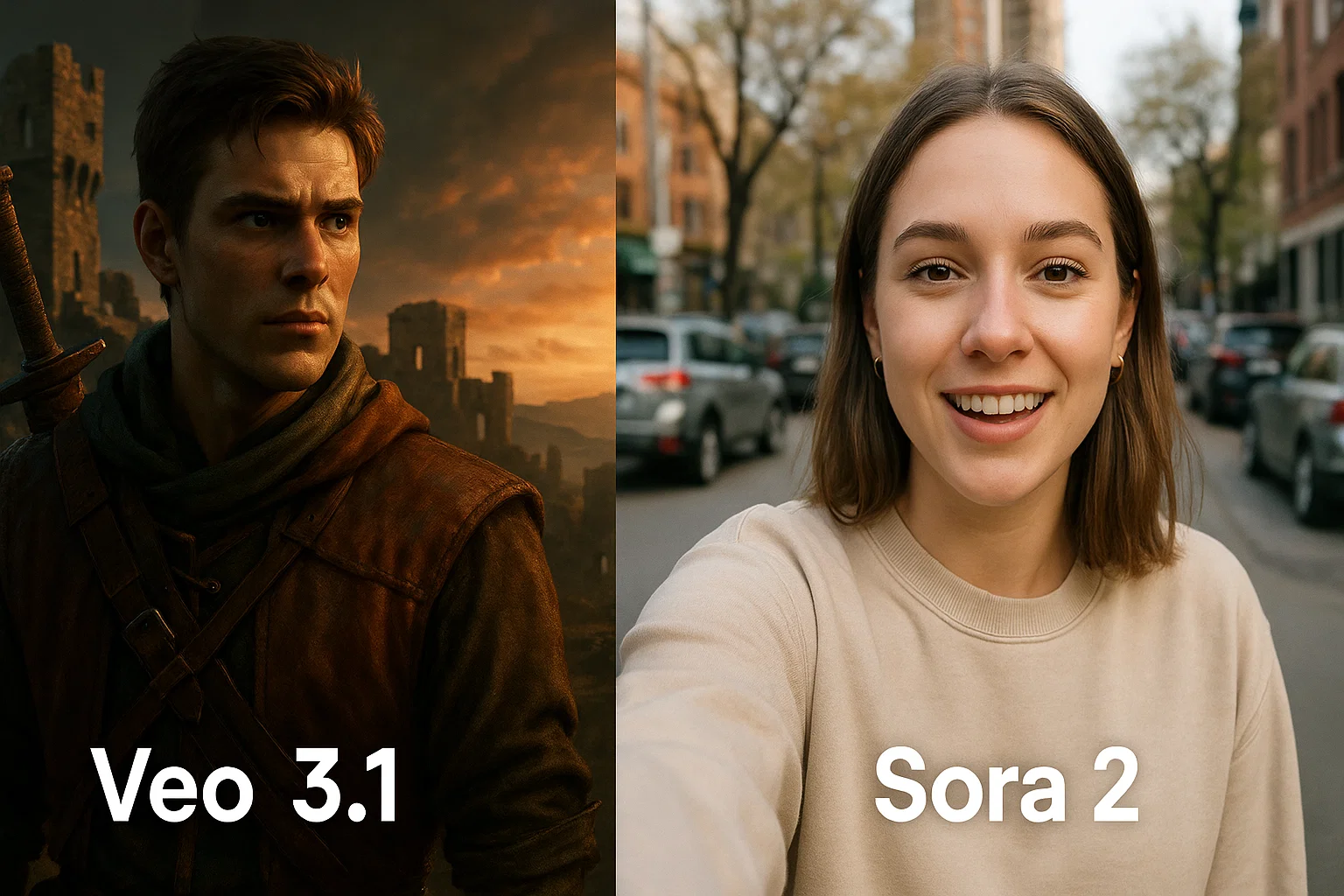
Veo 3.1 (left) creates a game-like cinematic, while Sora 2 (right) generated a realistic vlogger using its Cameo feature.
When prompted to create a vlogger touring a location from World of Warcraft, the differences were clear:
Veo 3.1 generated a stunning, game-like cinematic with an elf character acting as the vlogger. The style was consistent with the source material, but it created its own character.
Sora 2, using its Cameo feature, inserted the reviewer’s actual face into the scene, creating a photorealistic vlog from within the game world.
Sora 2 appears more willing to engage with copyrighted characters and real-life likenesses, a territory Google seems to be avoiding for now. Similarly, a prompt for a slow-motion movie scene at an airport yielded more dynamic and artistic camera cuts from Sora 2, while Veo 3.1’s version was good but more straightforward.
Game-Changing New Features in Veo 3.1
Where Google Veo 3.1 truly shines is in its new suite of control-oriented features, giving creators the tools to direct the AI with incredible precision.
Frame-to-Frame Control: Directing the Narrative
This powerful feature allows you to provide a starting image and an ending image, and Veo 3.1 will generate the entire video transition between them. In one incredible example, a flat dollar bill (the start frame) was animated to fold itself via origami into a bull (the end frame). This shows the model’s ability to understand object permanence and complex physical transformations.
Ingredients to Video: Using Reference Images
The “Ingredients” feature lets you provide separate images for characters, backgrounds, or objects and combine them into a single, coherent scene. A demonstration showed a reference image of a woman and a separate image of a painting. Veo then generated a video of that woman walking through an art gallery and stopping to admire that specific painting, talking about how she feels “one with it.” The audio was even spatially accurate, sounding like it was recorded in a real gallery.
In-Image Prompting: A Director’s Dream?
Perhaps the most exciting update is the ability to draw or write instructions directly onto the first frame of a video. By boxing off an area and writing a command, you can direct the action with precision.
Example 1: An image of a serene coastal scene had a box drawn over the water with the text “a massive Kaiju monster bursts from the sea.” The resulting video showed exactly that, creating a dramatic and shocking moment.
Example 2: A tea bag hanging on a hook had a box drawn on it with the text “shark swims and bites the bag.” The AI generated a video of a shark swimming into the frame and viciously tearing the bag apart.
This “Remove the Text on Frame One” feature essentially allows for in-painting for video, giving creators a powerful new way to orchestrate complex scenes.
The Verdict: Is Veo 3.1 a True Contender?
Without a doubt, Google Veo 3.1 is an incredibly powerful and impressive step forward for AI video generation. Its focus on directorial control with features like frame-to-frame transitions and in-image prompting offers a different, more hands-on approach compared to Sora’s cinematic style.
While Sora 2 may currently have the edge in pure cinematic flair and handling specific IP, Veo 3.1’s new tools make it a formidable competitor that could become the go-to for creators who want to guide the AI’s creativity with precision. The race is officially on, and the real winner is anyone who loves to create.
For more analysis of the latest AI tools, be sure to check out our AI Tools & Reviews.
What do you think? Based on these first results, which model are you more excited about? Let us know in the comments below!
The recent joint statement from Microsoft and OpenAI has reaffirmed their long-term AI partnership, as reported by FutureTools News. This commitment to collaboration is expected to drive innovation in the field of artificial intelligence and shape the future of technology. The partnership between Microsoft and OpenAI has been instrumental in developing cutting-edge AI solutions, including the integration of OpenAI’s models with Microsoft’s Azure cloud platform.
Background of the Partnership
The partnership between Microsoft and OpenAI was formed with the goal of advancing the field of artificial intelligence and developing new technologies that can benefit society. The collaboration has led to significant breakthroughs in areas such as natural language processing and computer vision. The joint statement from Microsoft and OpenAI emphasizes their shared commitment to responsible AI development and the importance of ensuring that AI systems are aligned with human values.
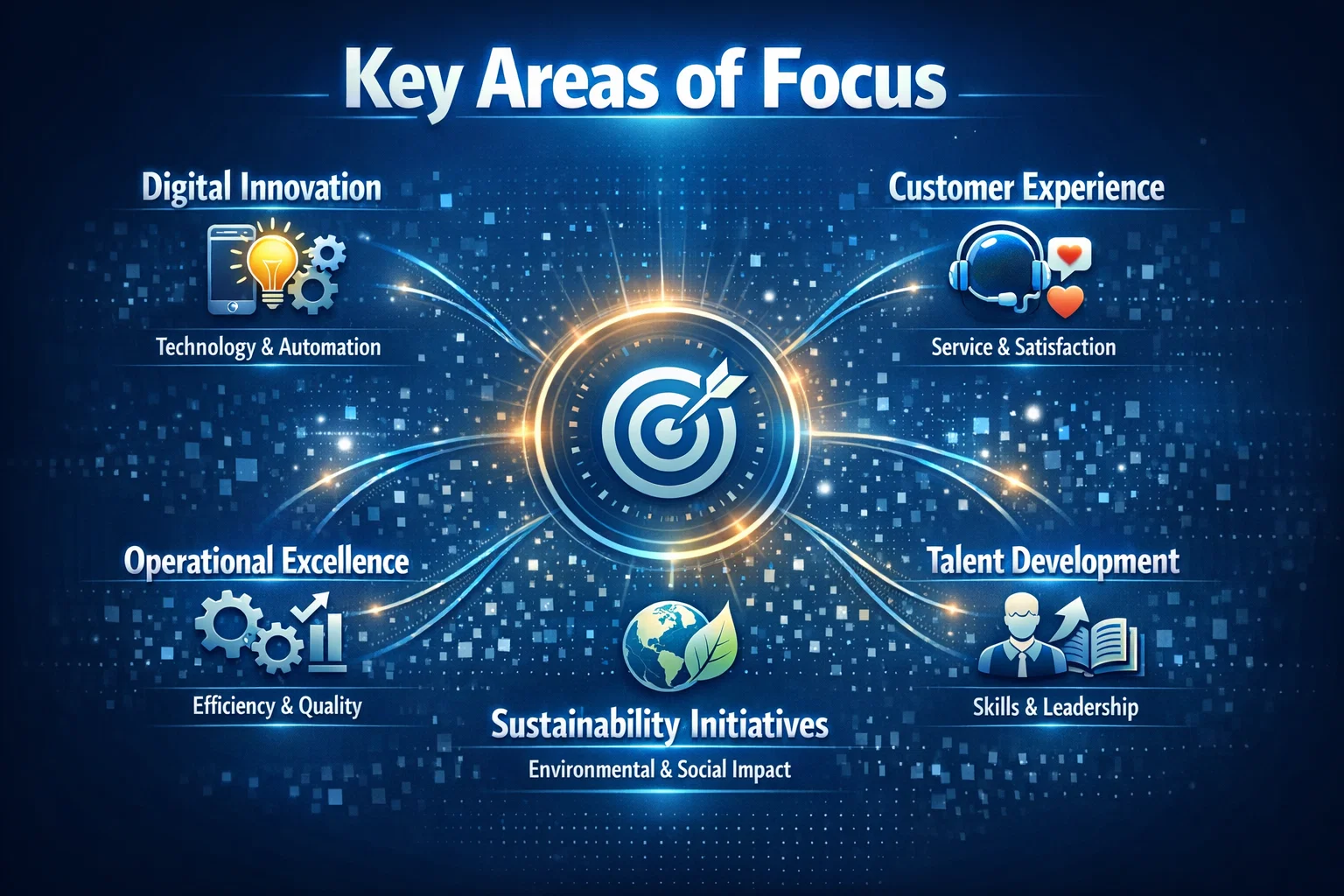
Key Areas of Focus
The partnership between Microsoft and OpenAI is focused on several key areas, including the development of large language models and the integration of AI with other technologies such as GitHub and AWS. The goal is to create AI systems that can learn and improve over time, and that can be used to solve complex problems in areas such as healthcare and education. As stated by a Microsoft spokesperson,
The partnership between Microsoft and OpenAI is a key part of our strategy to advance the field of artificial intelligence and to develop new technologies that can benefit society. We are committed to working together to ensure that AI systems are developed and used in ways that are responsible and aligned with human values.
Future Directions
The joint statement from Microsoft and OpenAI also highlights their plans for future collaboration and innovation. The partners are expected to continue working together to develop new AI technologies and to explore new applications for AI in areas such as cybersecurity and sustainability. The partnership is also expected to drive innovation in the field of AI ethics and to promote the development of AI systems that are transparent, explainable, and fair. As the field of artificial intelligence continues to evolve, the partnership between Microsoft and OpenAI is likely to play a significant role in shaping the future of technology and ensuring that AI systems are developed and used in ways that benefit society.
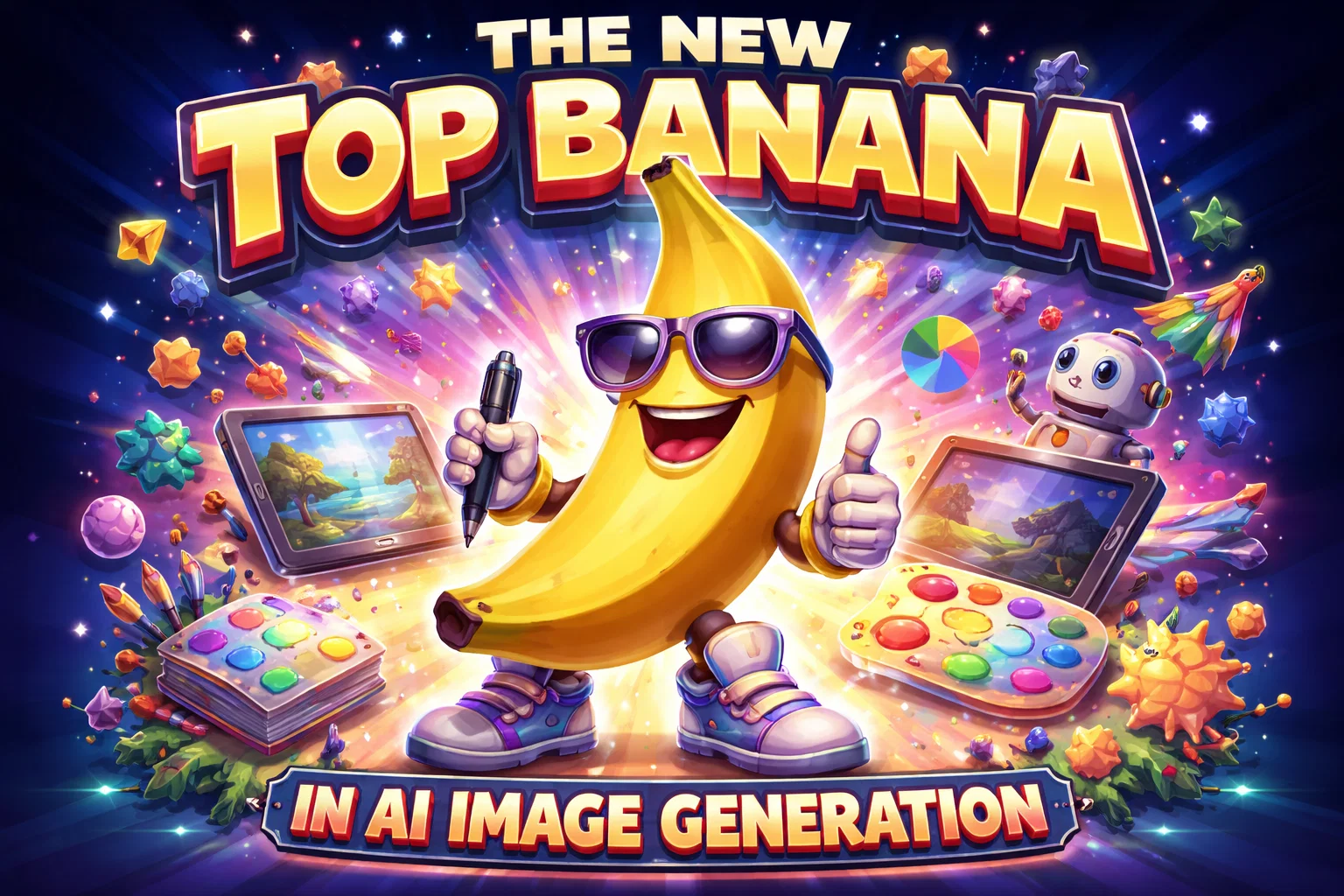
The field of AI image generation has witnessed tremendous growth in recent years, with various models and techniques being developed to create realistic and diverse images. As reported by The Rundown AI, the latest advancements in this field have led to the emergence of a new top banana in AI image generation. This article will delve into the details of this new development and explore its potential applications.
Introduction to AI Image Generation
AI image generation refers to the use of artificial intelligence algorithms to create images that are similar to those produced by humans. This technology has numerous applications, including computer vision, robotics, and gaming. The process of AI image generation involves training a model on a large dataset of images, which enables it to learn patterns and features that can be used to generate new images.
The New Top Banana in AI Image Generation
According to The Rundown AI, the new top banana in AI image generation is a model developed by Anthropic, a leading AI research organization. This model has demonstrated exceptional capabilities in generating high-quality images that are comparable to those produced by humans. The model’s architecture is based on a combination of deep learning and machine learning techniques, which enables it to learn complex patterns and features from large datasets.
The new top banana in AI image generation has the potential to revolutionize the field of computer vision and enable the development of more sophisticated AI-powered applications.
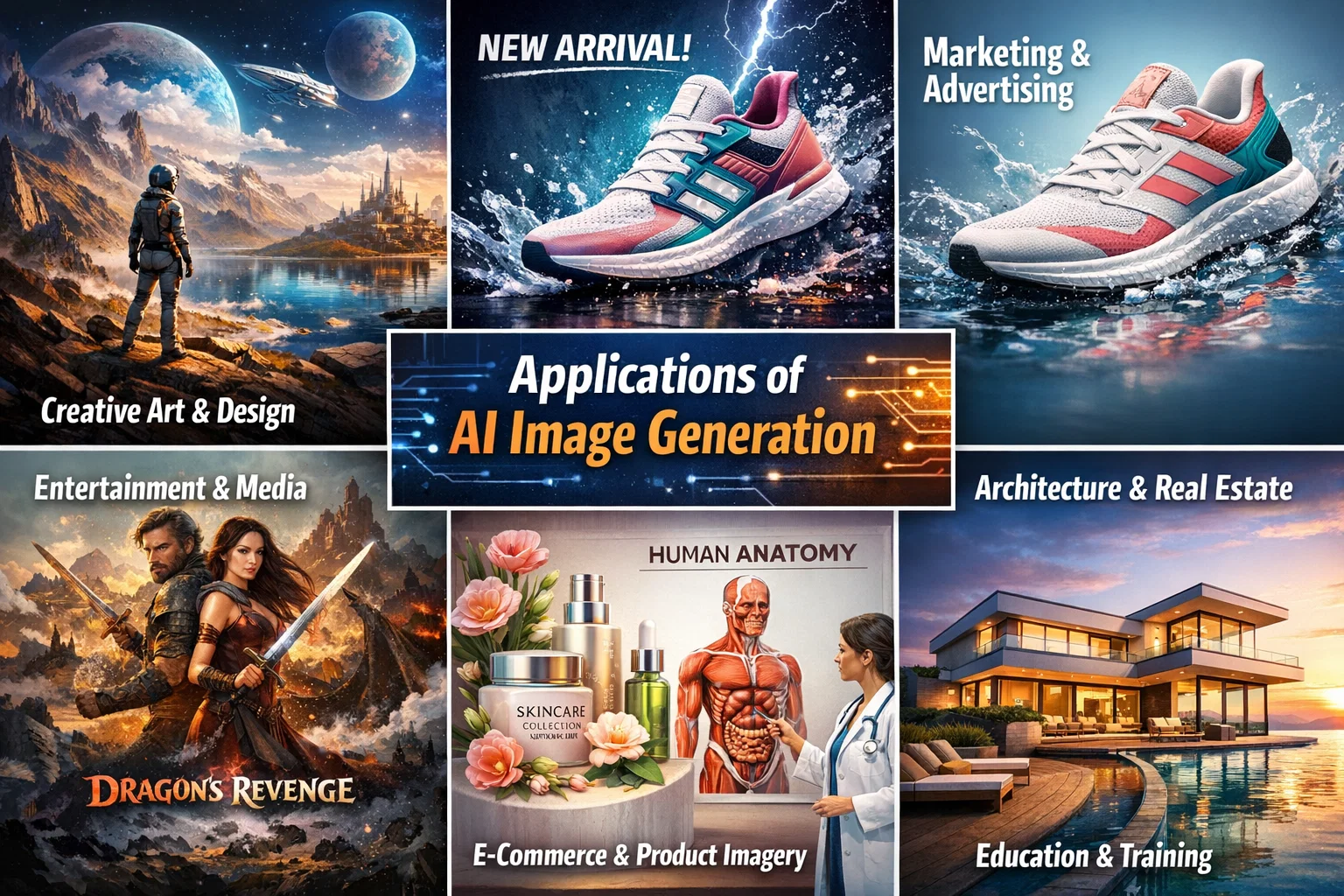
Applications of AI Image Generation
The applications of AI image generation are diverse and widespread. Some of the most significant applications include computer vision, robotics, gaming, and healthcare. In computer vision, AI image generation can be used to create synthetic images that can be used to train models for object detection, segmentation, and recognition. In robotics, AI image generation can be used to create realistic simulations of environments, which can be used to train robots to navigate and interact with their surroundings.
Creating an AI Assistant with its Own Phone Number
In addition to AI image generation, The Rundown AI also provides information on how to create an AI assistant with its own phone number. This can be achieved using a combination of natural language processing and machine learning techniques, which enable the AI assistant to understand and respond to voice commands. The AI assistant can be integrated with various platforms, including GitHub, to enable seamless communication and interaction.
Conclusion
In conclusion, the new top banana in AI image generation has the potential to revolutionize the field of computer vision and enable the development of more sophisticated AI-powered applications. The applications of AI image generation are diverse and widespread, and the technology has the potential to transform various industries, including healthcare, gaming, and robotics. As reported by The Rundown AI, the future of AI image generation looks promising, and we can expect to see significant advancements in this field in the coming years.
The concept of intelligence ownership has been gaining traction in recent years, and for good reason. As Cisco has demonstrated, owning intelligence rather than renting it can be a game-changer for enterprises looking to scale their operations securely. According to a recent article by The Rundown AI, Cisco’s strategy to scale agents securely and reshape enterprise workflows is a prime example of this shift.
The Importance of Intelligence Ownership
Owning intelligence means having control over the data, algorithms, and insights that drive business decisions. This is particularly crucial in today’s fast-paced, data-driven world, where artificial intelligence and machine learning are becoming increasingly prevalent. By owning their intelligence, enterprises can ensure that their systems are secure, transparent, and aligned with their overall goals.
Scaling Agents Securely with Cisco
Cisco’s approach to scaling agents securely is centered around the idea of intelligence ownership. By developing and owning their own AI-powered agents, Cisco is able to ensure that their systems are secure, efficient, and tailored to their specific needs. This approach has allowed Cisco to reshape their enterprise workflows and improve overall productivity. As AWS and other cloud providers continue to evolve, the importance of owning intelligence will only continue to grow.
Cisco’s strategy is a great example of how owning intelligence can help enterprises scale their operations securely and efficiently. By taking control of their data and algorithms, companies can ensure that their systems are aligned with their overall goals and values.
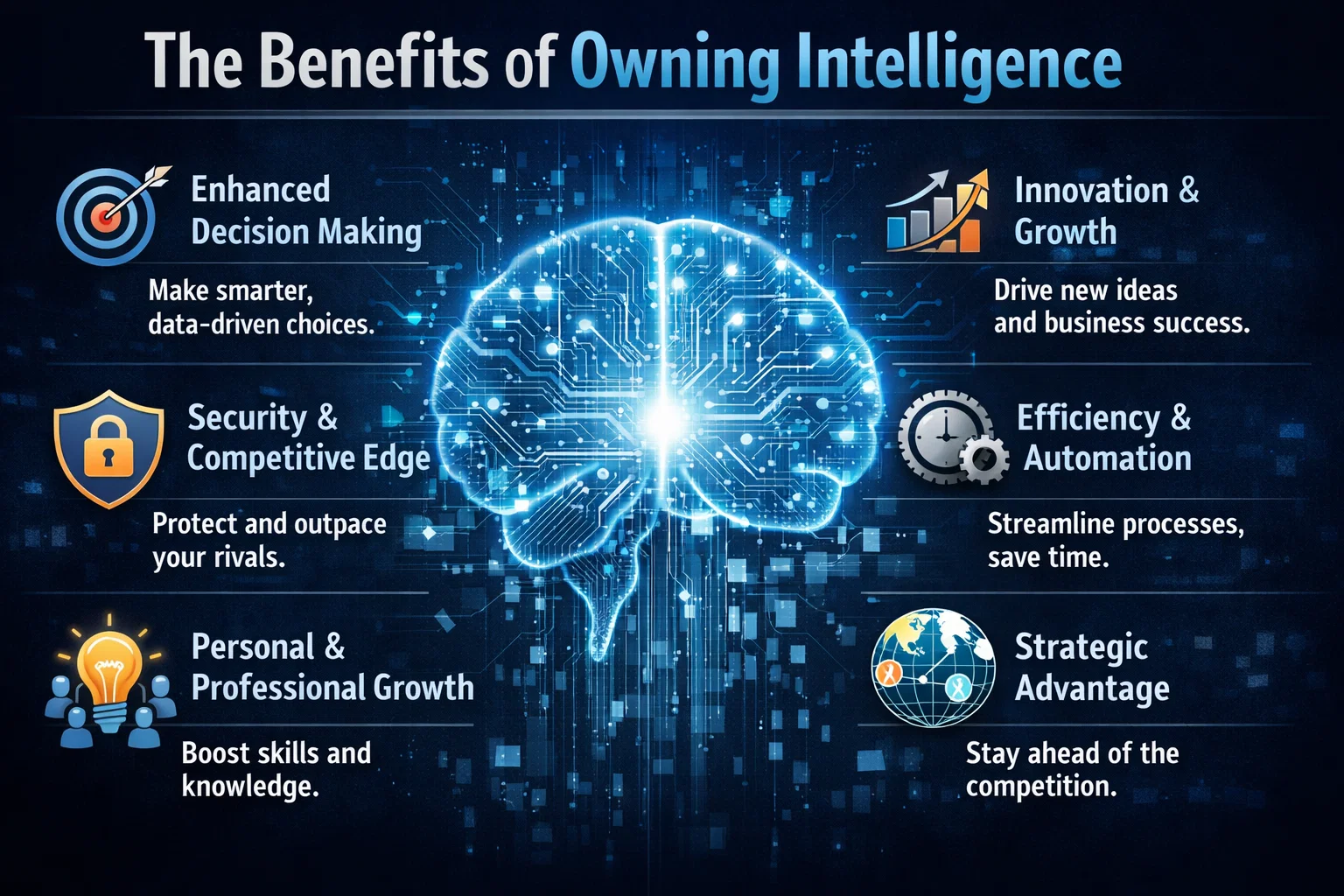
The Benefits of Owning Intelligence
So why should enterprises prioritize intelligence ownership? The benefits are numerous. For one, owning intelligence provides a level of control and transparency that is difficult to achieve with rented intelligence. It also allows enterprises to develop systems that are tailored to their specific needs and goals, rather than relying on generic, off-the-shelf solutions. Additionally, owning intelligence can help enterprises to improve their overall security posture, as they are able to develop and implement their own security protocols and measures.
In contrast, rented intelligence can be limiting and inflexible. When enterprises rely on rented intelligence, they are often at the mercy of the provider, with limited control over the data, algorithms, and insights that drive their business decisions. This can lead to a lack of transparency, security risks, and a general sense of disempowerment.
Real-World Applications
So what does intelligence ownership look like in practice? One example is the development of custom GitHub repositories, which allow enterprises to own and control their code and data. Another example is the use of Azure and other cloud platforms to develop and deploy custom AI-powered solutions. By taking control of their intelligence, enterprises can develop systems that are tailored to their specific needs and goals, and that provide a level of security, transparency, and efficiency that is difficult to achieve with rented intelligence.