


Connect with us

AI News & Updates

SIMA 2: The Ultimate AI Gamer That Learns Like You Do

Published

on

SIMA 2: The Ultimate AI Gamer That Learns Like You Do

Google DeepMind has just unveiled its latest breakthrough, an AI agent named SIMA 2, which is revolutionizing how we perceive artificial intelligence in virtual environments. Unlike traditional game bots that are programmed for specific tasks, this AI agent learns and adapts by playing games just as a human would—using a keyboard and mouse and observing the gameplay on screen. This new development marks a significant leap from its predecessor, showcasing an incredible evolution in AI’s ability to interact with complex digital worlds.

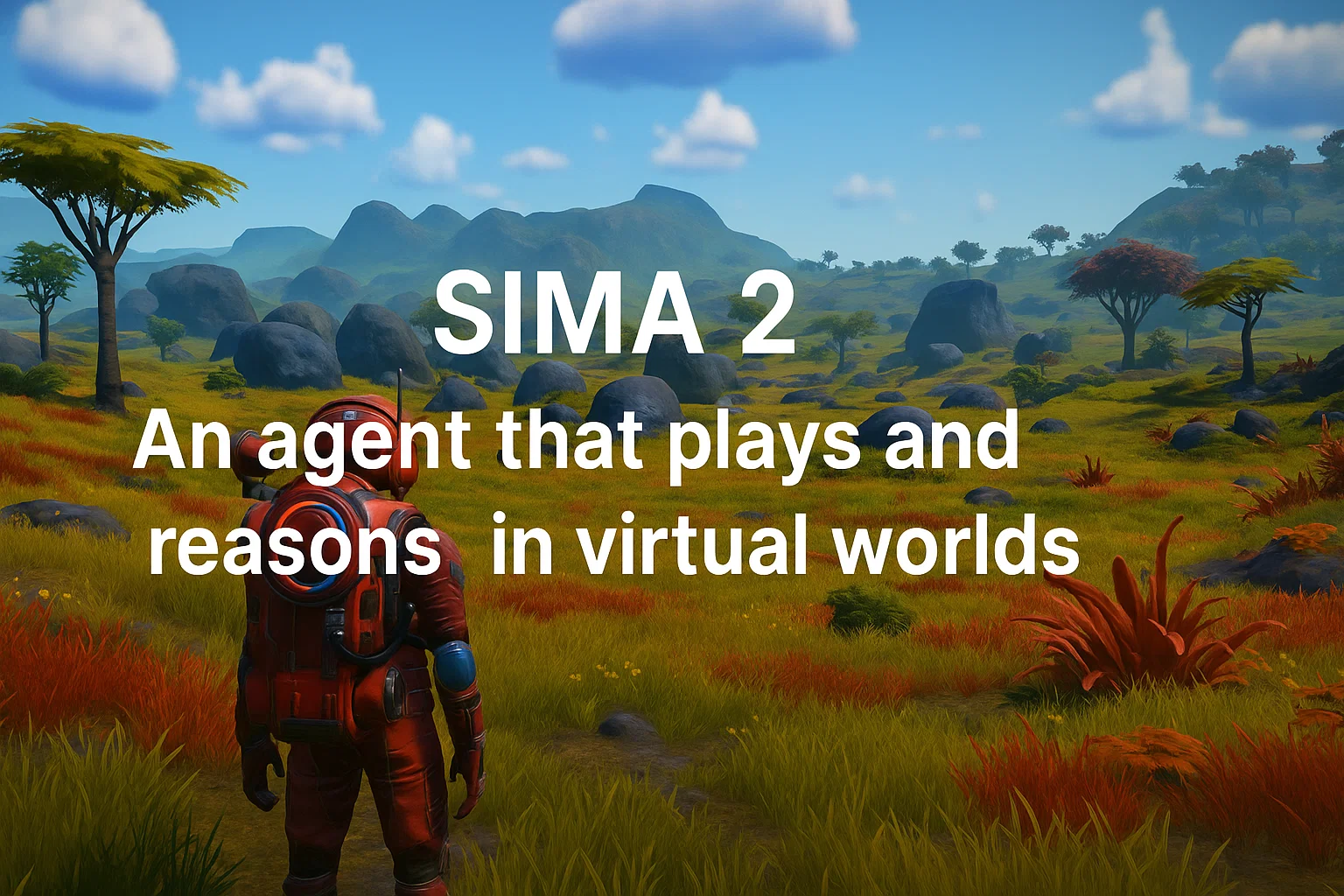
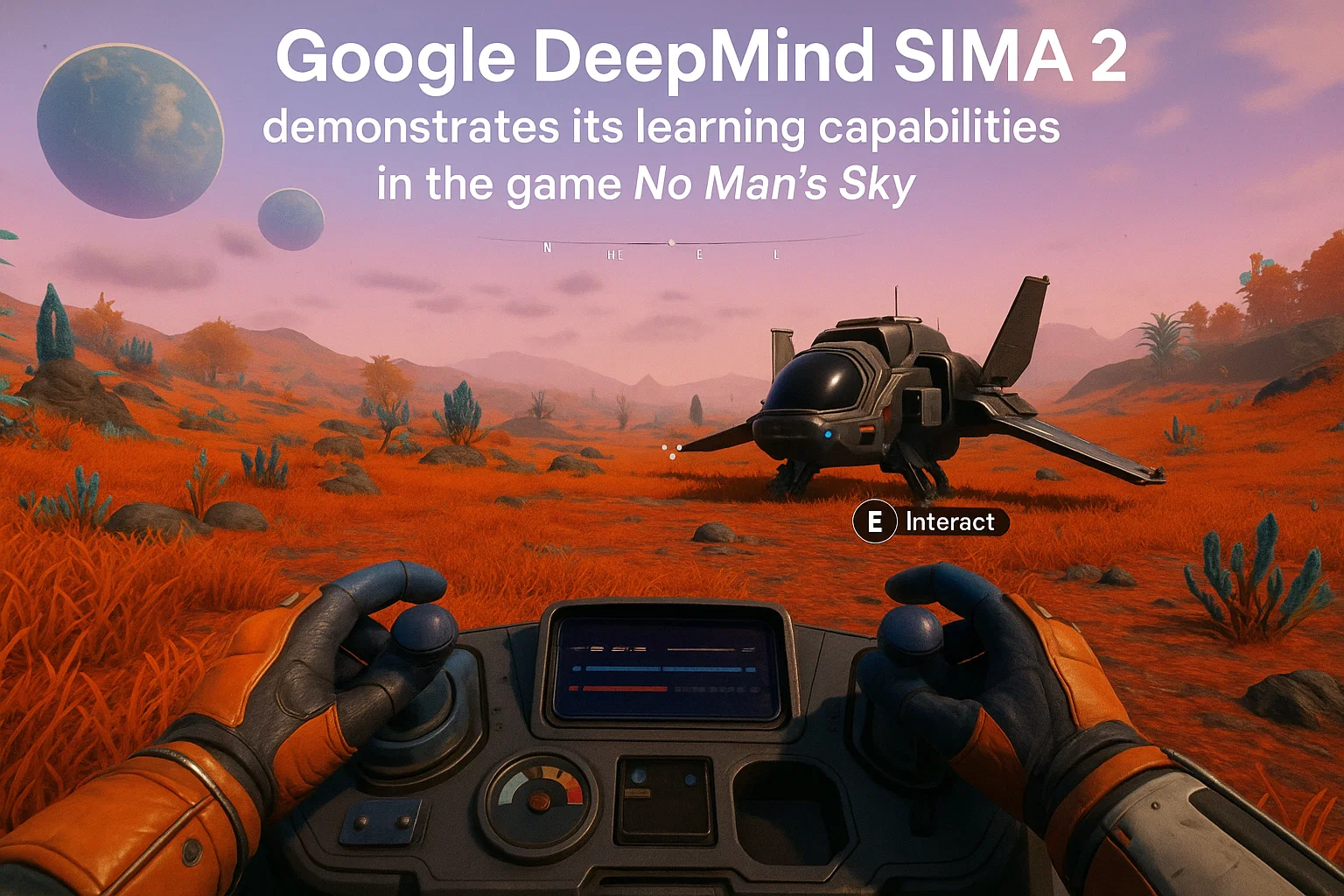
Google DeepMind's SIMA 2 demonstrates its learning capabilities in the game No Man's Sky.
Google DeepMind’s SIMA 2 demonstrates its learning capabilities in the game No Man’s Sky.

What Makes SIMA 2 a Game-Changer?

While we’ve seen AI bots in games before, SIMA 2 is fundamentally different. It’s not just following a script; it’s an interactive gaming companion. By integrating the advanced capabilities of Google’s Gemini models, this AI can do more than just follow instructions. It can now think about its goals, converse with users, and improve itself over time. This ability to learn, understand, and adapt makes it one of the closest systems we have to how humans learn, especially in the context of video games.

From Instruction-Follower to Interactive Companion

The first version, SIMA 1, was trained on human demonstrations to learn over 600 basic language-following skills like “turn left” or “climb the ladder.” It operated by looking at the screen and using virtual controls, without any access to the game’s underlying code. This was a crucial first step in teaching an AI to translate language into meaningful action.

With SIMA 2, the agent has evolved beyond simple instruction-following. It can now engage in complex reasoning, understand nuanced commands, and execute goal-oriented actions. For instance, when asked to find an “egg-shaped object,” the AI can explore its environment, identify the object, and even report back on its composition after scanning it.

To learn more about how AI models are evolving, you might be interested in our articles on the Future of AI & Trends.

A Leap in Generalization and Performance

One of the most impressive aspects of SIMA 2 is its improved generalization performance. It can now understand and carry out complex tasks in games and situations it has never been trained on before. This shows an unprecedented level of adaptability.

Task Completion: SIMA 1 vs. SIMA 2

The progress between the two versions is stark. On a benchmark of various in-game tasks, SIMA 1 had a success rate of 31%, while a human player’s baseline was around 76%. In a significant leap, SIMA 2 achieved a 65% success rate. While still not at a human level, the gap is closing rapidly, demonstrating the incredible pace of AI development.

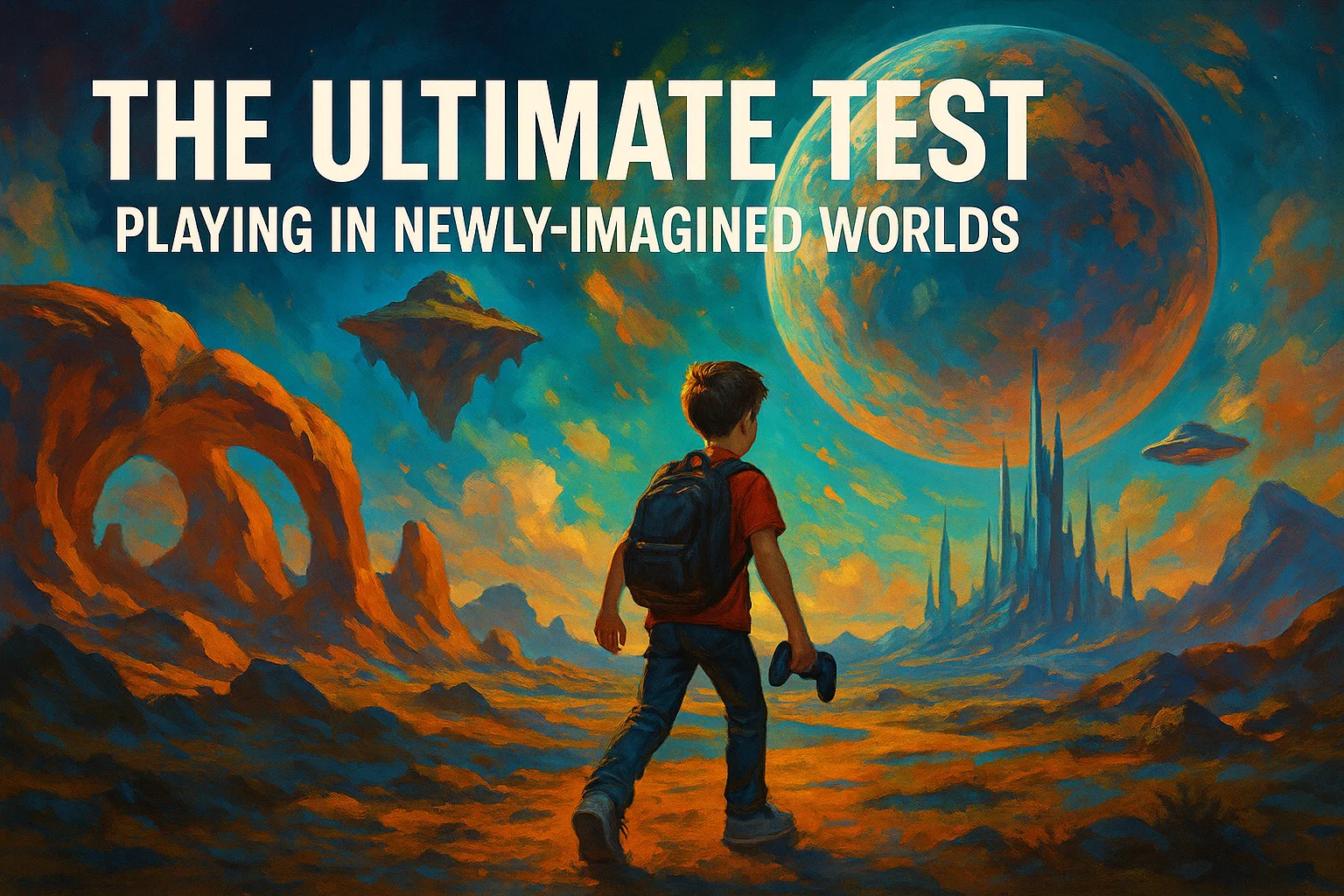
The Ultimate Test: Playing in Newly-Imagined Worlds

The Ultimate Test: Playing in Newly-Imagined Worlds

To truly test its limits, researchers challenged SIMA 2 to play in worlds it had never encountered, generated by another groundbreaking project, Genie 3. Genie 3 can create new, real-time 3D simulated worlds from a single image or text prompt. Even in these completely novel environments, SIMA 2 was able to:

  • Sensibly orient itself.
  • Understand user instructions.
  • Take meaningful actions toward goals.

This demonstrates a remarkable level of adaptability and is a major milestone toward training general agents that can operate across diverse, generated worlds.

Self-Improvement and the Future

A key capability of this advanced AI is its capacity for self-improvement. After its initial training from human demonstrations, it can transition to learning in new games entirely through self-directed play. The data from its own experiences can then be used to train the next, even more capable version of the agent.

For a deeper dive into the technical aspects of AI agents, consider exploring the research published on Google DeepMind’s official blog.

The journey to general embodied intelligence is well underway. The skills learned from navigation and tool use in these virtual worlds are the fundamental building blocks for future AI assistants in the physical world. As these technologies continue to advance, the line between human and AI capabilities in complex environments will only become more blurred.

AI News & Updates

Microsoft and OpenAI Reaffirm Long-Term AI Partnership

Microsoft and OpenAI reaffirm long-term AI partnership

Published

on

Microsoft and OpenAI issue joint statement reaffirming long-term AI partnership- blogs.microsoft.com - Featured Image

The recent joint statement from Microsoft and OpenAI has reaffirmed their long-term AI partnership, as reported by FutureTools News. This commitment to collaboration is expected to drive innovation in the field of artificial intelligence and shape the future of technology. The partnership between Microsoft and OpenAI has been instrumental in developing cutting-edge AI solutions, including the integration of OpenAI’s models with Microsoft’s Azure cloud platform.

Background of the Partnership
Background of the Partnership

The partnership between Microsoft and OpenAI was formed with the goal of advancing the field of artificial intelligence and developing new technologies that can benefit society. The collaboration has led to significant breakthroughs in areas such as natural language processing and computer vision. The joint statement from Microsoft and OpenAI emphasizes their shared commitment to responsible AI development and the importance of ensuring that AI systems are aligned with human values.

Key Areas of Focus
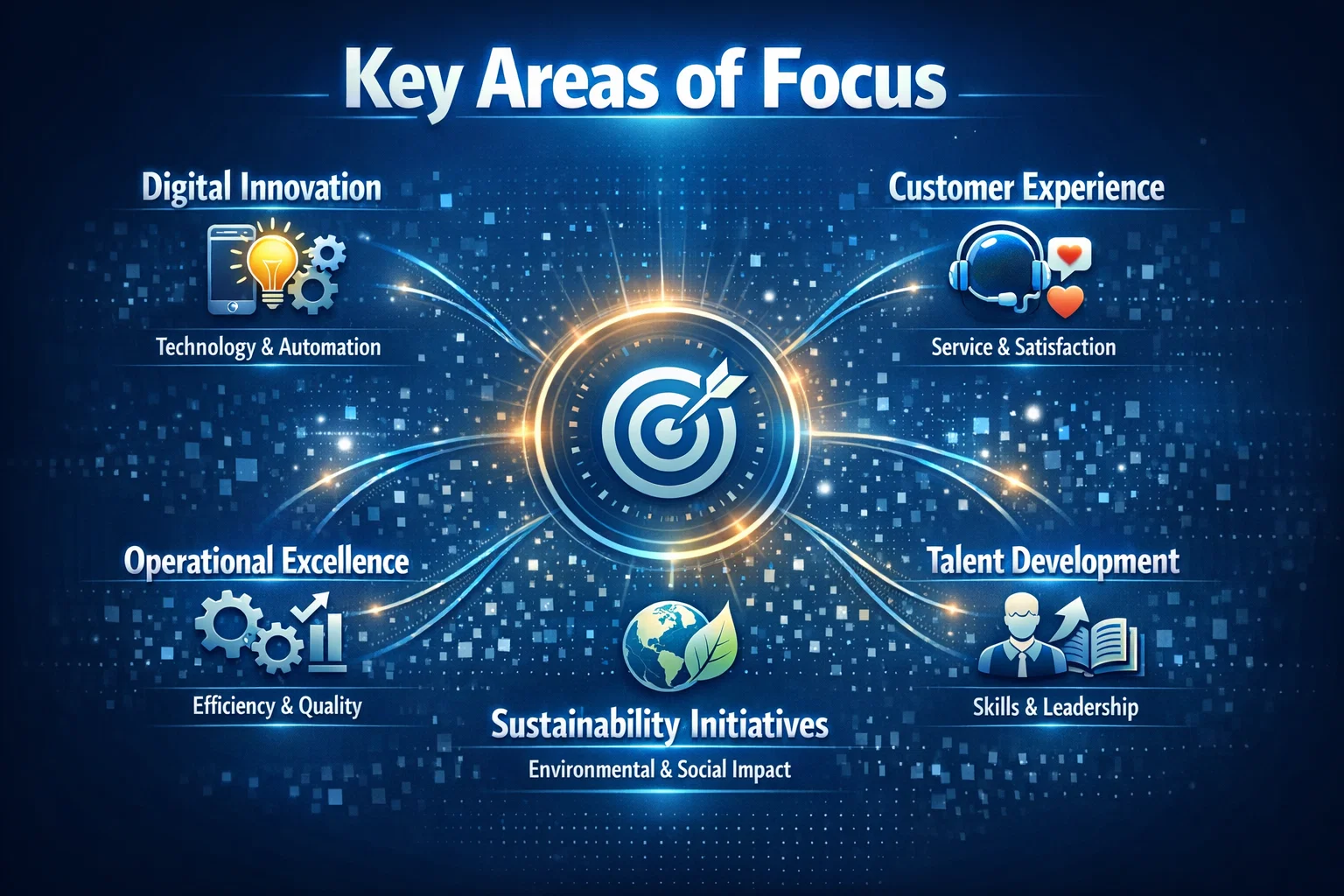
Key Areas of Focus

The partnership between Microsoft and OpenAI is focused on several key areas, including the development of large language models and the integration of AI with other technologies such as GitHub and AWS. The goal is to create AI systems that can learn and improve over time, and that can be used to solve complex problems in areas such as healthcare and education. As stated by a Microsoft spokesperson,

The partnership between Microsoft and OpenAI is a key part of our strategy to advance the field of artificial intelligence and to develop new technologies that can benefit society. We are committed to working together to ensure that AI systems are developed and used in ways that are responsible and aligned with human values.

Future Directions

The joint statement from Microsoft and OpenAI also highlights their plans for future collaboration and innovation. The partners are expected to continue working together to develop new AI technologies and to explore new applications for AI in areas such as cybersecurity and sustainability. The partnership is also expected to drive innovation in the field of AI ethics and to promote the development of AI systems that are transparent, explainable, and fair. As the field of artificial intelligence continues to evolve, the partnership between Microsoft and OpenAI is likely to play a significant role in shaping the future of technology and ensuring that AI systems are developed and used in ways that benefit society.


Continue Reading

AI News & Updates

Revolutionizing Visuals: The New Top Banana in AI Image Generation

Revolutionizing visuals with AI image generation

Published

on

The new top banana in AI image generation - Featured Image

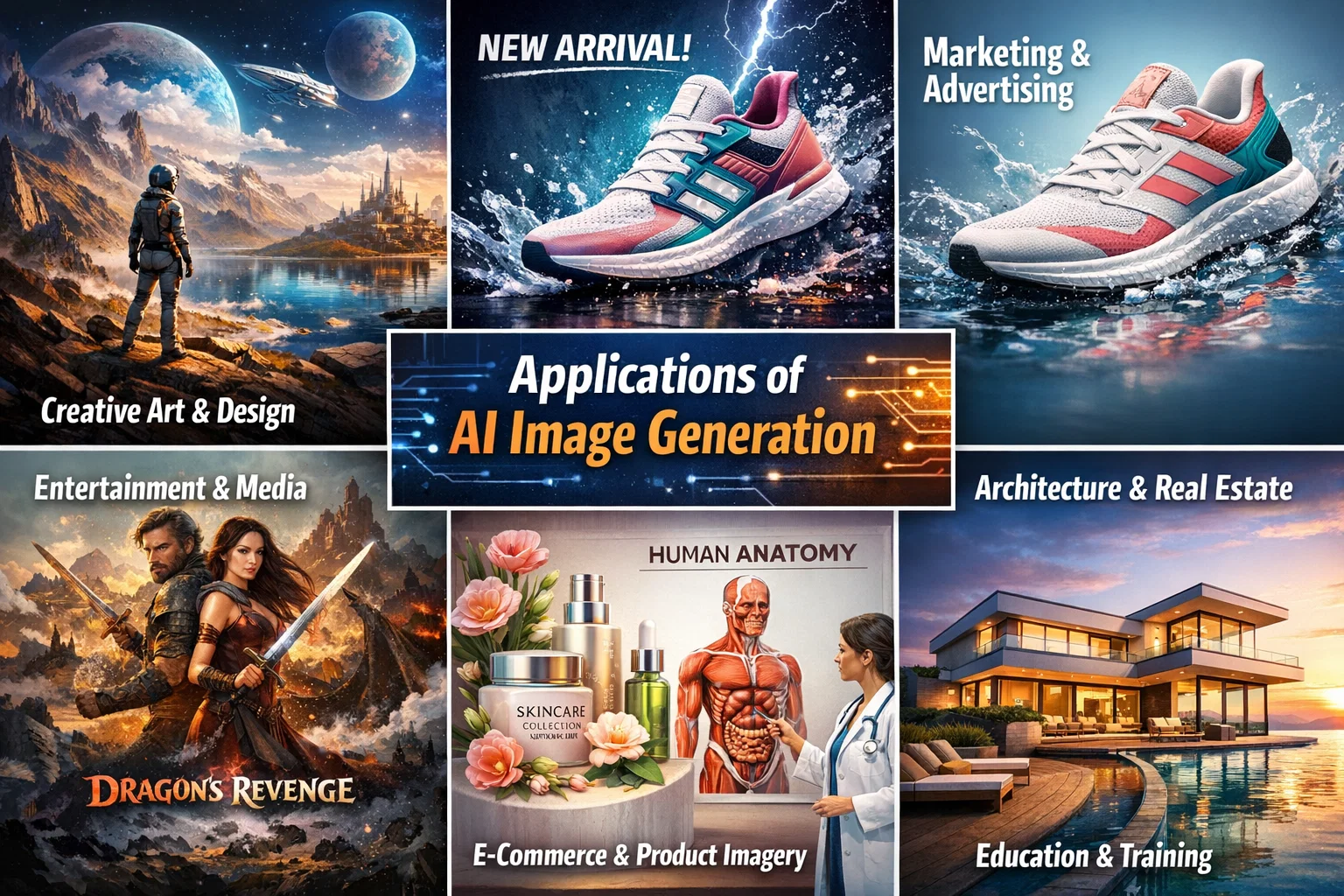
The field of AI image generation has witnessed tremendous growth in recent years, with various models and techniques being developed to create realistic and diverse images. As reported by The Rundown AI, the latest advancements in this field have led to the emergence of a new top banana in AI image generation. This article will delve into the details of this new development and explore its potential applications.

Introduction to AI Image Generation

AI image generation refers to the use of artificial intelligence algorithms to create images that are similar to those produced by humans. This technology has numerous applications, including computer vision, robotics, and gaming. The process of AI image generation involves training a model on a large dataset of images, which enables it to learn patterns and features that can be used to generate new images.

The New Top Banana in AI Image Generation

The New Top Banana in AI Image Generation

According to The Rundown AI, the new top banana in AI image generation is a model developed by Anthropic, a leading AI research organization. This model has demonstrated exceptional capabilities in generating high-quality images that are comparable to those produced by humans. The model’s architecture is based on a combination of deep learning and machine learning techniques, which enables it to learn complex patterns and features from large datasets.

The new top banana in AI image generation has the potential to revolutionize the field of computer vision and enable the development of more sophisticated AI-powered applications.

Applications of AI Image Generation

Applications of AI Image Generation

The applications of AI image generation are diverse and widespread. Some of the most significant applications include computer vision, robotics, gaming, and healthcare. In computer vision, AI image generation can be used to create synthetic images that can be used to train models for object detection, segmentation, and recognition. In robotics, AI image generation can be used to create realistic simulations of environments, which can be used to train robots to navigate and interact with their surroundings.

Creating an AI Assistant with its Own Phone Number

In addition to AI image generation, The Rundown AI also provides information on how to create an AI assistant with its own phone number. This can be achieved using a combination of natural language processing and machine learning techniques, which enable the AI assistant to understand and respond to voice commands. The AI assistant can be integrated with various platforms, including GitHub, to enable seamless communication and interaction.

Conclusion

In conclusion, the new top banana in AI image generation has the potential to revolutionize the field of computer vision and enable the development of more sophisticated AI-powered applications. The applications of AI image generation are diverse and widespread, and the technology has the potential to transform various industries, including healthcare, gaming, and robotics. As reported by The Rundown AI, the future of AI image generation looks promising, and we can expect to see significant advancements in this field in the coming years.

Continue Reading

AI How-To's & Tricks

Unlocking True Potential: Why Intelligence Should be Owned, Not Rented

Learn why owning intelligence is crucial for enterprise success

Published

on

Intelligence should be owned, not rented - Featured Image

The concept of intelligence ownership has been gaining traction in recent years, and for good reason. As Cisco has demonstrated, owning intelligence rather than renting it can be a game-changer for enterprises looking to scale their operations securely. According to a recent article by The Rundown AI, Cisco’s strategy to scale agents securely and reshape enterprise workflows is a prime example of this shift.

The Importance of Intelligence Ownership

Owning intelligence means having control over the data, algorithms, and insights that drive business decisions. This is particularly crucial in today’s fast-paced, data-driven world, where artificial intelligence and machine learning are becoming increasingly prevalent. By owning their intelligence, enterprises can ensure that their systems are secure, transparent, and aligned with their overall goals.

Scaling Agents Securely with Cisco

Scaling Agents Securely with Cisco

Cisco’s approach to scaling agents securely is centered around the idea of intelligence ownership. By developing and owning their own AI-powered agents, Cisco is able to ensure that their systems are secure, efficient, and tailored to their specific needs. This approach has allowed Cisco to reshape their enterprise workflows and improve overall productivity. As AWS and other cloud providers continue to evolve, the importance of owning intelligence will only continue to grow.

Cisco’s strategy is a great example of how owning intelligence can help enterprises scale their operations securely and efficiently. By taking control of their data and algorithms, companies can ensure that their systems are aligned with their overall goals and values.

The Benefits of Owning Intelligence

The Benefits of Owning Intelligence

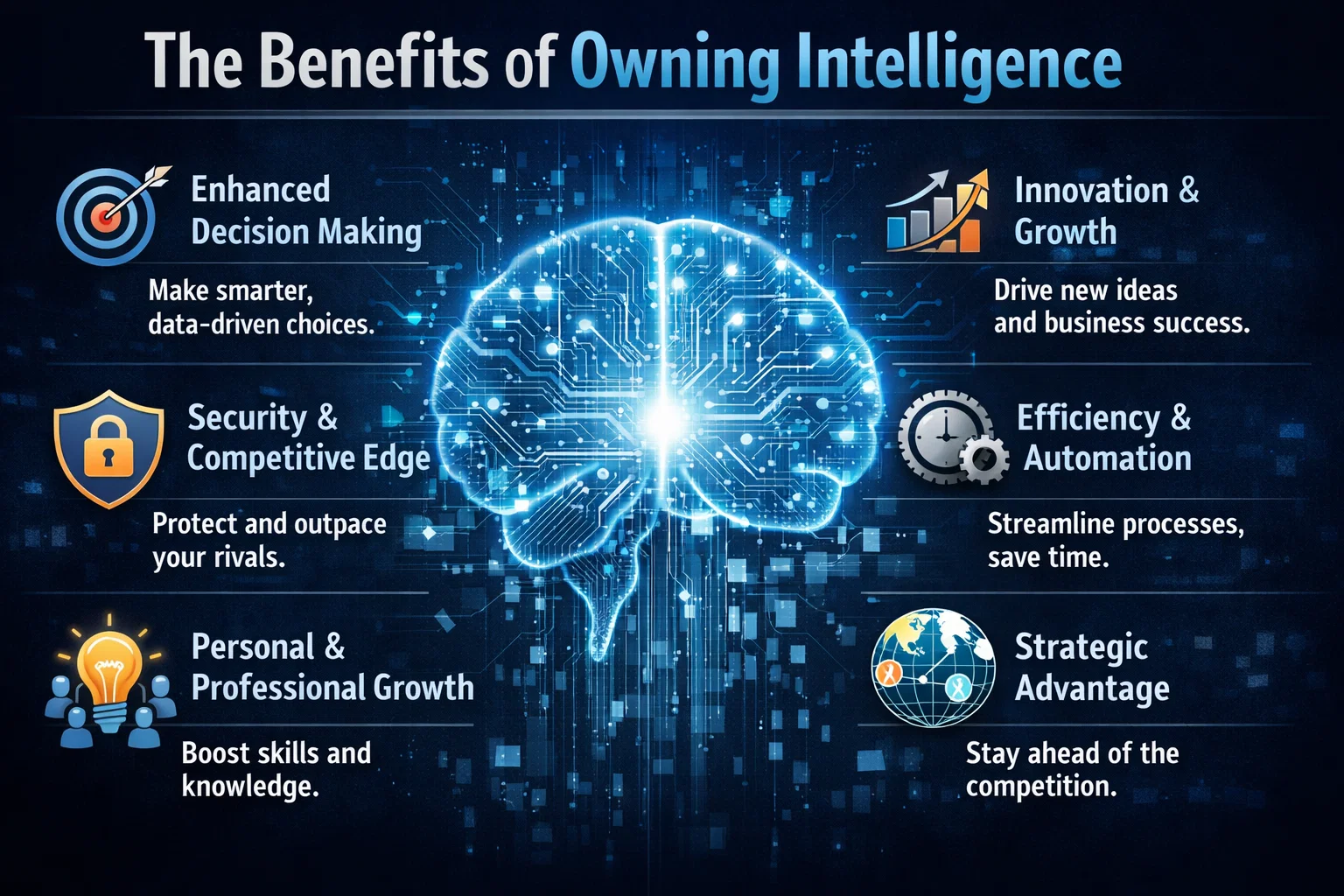
So why should enterprises prioritize intelligence ownership? The benefits are numerous. For one, owning intelligence provides a level of control and transparency that is difficult to achieve with rented intelligence. It also allows enterprises to develop systems that are tailored to their specific needs and goals, rather than relying on generic, off-the-shelf solutions. Additionally, owning intelligence can help enterprises to improve their overall security posture, as they are able to develop and implement their own security protocols and measures.

In contrast, rented intelligence can be limiting and inflexible. When enterprises rely on rented intelligence, they are often at the mercy of the provider, with limited control over the data, algorithms, and insights that drive their business decisions. This can lead to a lack of transparency, security risks, and a general sense of disempowerment.

Real-World Applications

So what does intelligence ownership look like in practice? One example is the development of custom GitHub repositories, which allow enterprises to own and control their code and data. Another example is the use of Azure and other cloud platforms to develop and deploy custom AI-powered solutions. By taking control of their intelligence, enterprises can develop systems that are tailored to their specific needs and goals, and that provide a level of security, transparency, and efficiency that is difficult to achieve with rented intelligence.

Continue Reading

Trending